
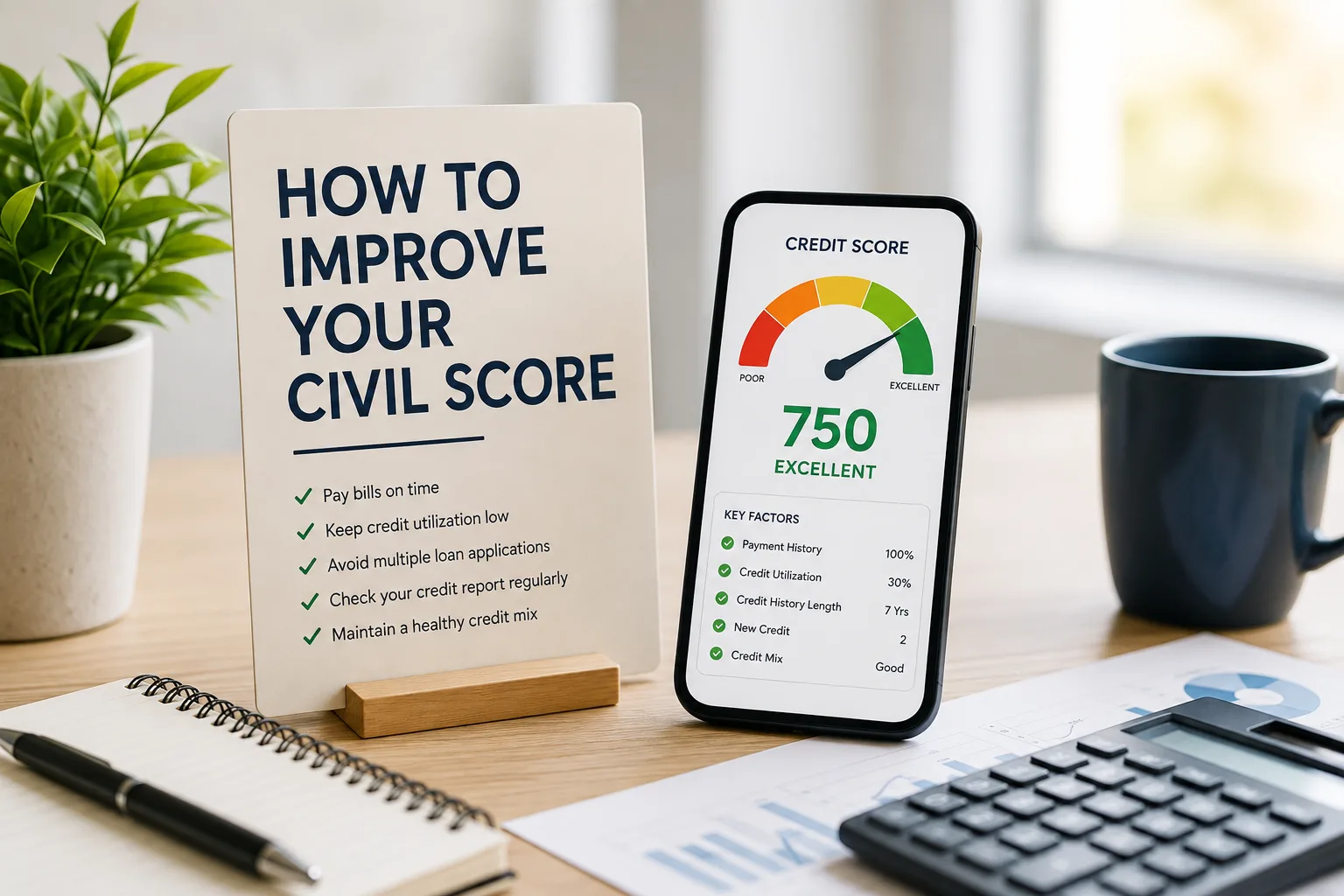
A good CIBIL score can make borrowing easier, faster, and more affordable. Whether you are planning to take a personal loan, business loan, home loan, or credit card, your credit history plays an important role in how lenders evaluate your application.If your CIBIL score is low, there is no need to panic. With disciplined financial habits and consistent repayment behavior, you can gradually improve your credit profile.In this guide, Mahalaxmi Capital Group explains practical ways to improve your CIBIL score and build healthier credit habits.
What Is a CIBIL Score?
A CIBIL score is a three-digit number that represents your creditworthiness based on your credit history and repayment behavior.Credit scores in India often fall between 300 and 900. Stronger credit conduct is typically indicated by a higher score, which may increase your chances of being granted credit. Before issuing a loan, lenders may also take into account your income, current debts, employment or business background, supporting papers, and other aspects.
Why Is a Good CIBIL Score Important?
Maintaining a healthy CIBIL score can provide several financial advantages: Better chances of loan approval Potentially better interest-rate offers Higher chances of receiving suitable credit limits Faster evaluation of credit applications Greater confidence from lenders Better access to financial products A good credit score does not guarantee loan approval, but it can strengthen your overall loan profile.
Always Pay Your EMIs and Bills on Time
Payment history is one of the most important parts of your credit profile. Missing an EMI or credit-card payment can negatively affect your credit history. Even a single delayed payment can create problems, especially if delays become frequent. Set reminders or use automatic payment options where appropriate. Make sure sufficient funds are available before your EMI due date. Simple rule: Never ignore an upcoming EMI or credit-card bill.
Keep Your Credit Utilization Low
Credit utilization refers to how much of your available revolving credit you are using. For example, if your credit-card limit is ₹1,00,000 and you regularly use ₹80,000, your utilization is high. Try to maintain responsible utilization rather than continuously using most of your available limit. Lower utilization can demonstrate better control over revolving credit. However, don't increase spending simply to improve your credit score. The goal should always be responsible borrowing.
Avoid Applying for Too Many Loans at Once
Every loan or credit-card application may involve a credit inquiry. Making multiple applications within a short period can make your credit profile appear more credit-dependent. It can also make managing multiple new accounts difficult. Before applying, compare your requirements and apply only for credit that you genuinely need.
Maintain a Healthy Credit Mix
A balanced credit profile can include different types of credit, such as secured and unsecured loans. For example, secured credit may include a home or vehicle loan, while unsecured credit may include personal loans or credit cards. However, you should never take a loan simply to create a credit mix. Borrow only when there is a genuine financial requirement, and you can comfortably manage the repayment.
Build a Longer Credit History
A longer record of responsible credit management can demonstrate financial discipline. If you have an old credit account that is well managed, think carefully before closing it. Closing an old account may affect aspects of your credit profile, depending on your individual circumstances. Instead of frequently opening and closing accounts, focus on maintaining existing credit responsibly.
Check Your Credit Report Regularly
Errors in your credit report can sometimes create unnecessary problems. Review your credit report periodically and check important information such as: Personal details Loan accounts Credit-card accounts Outstanding balances Repayment history Account status Credit inquiries If you find incorrect information, raise a dispute with the relevant credit bureau or lender and follow up until the issue is resolved.
Don't Ignore Outstanding Dues
If you have overdue payments, don't simply leave them unresolved. Review your outstanding obligations, prioritize repayment, and communicate with your lender where necessary. Clearing overdue amounts is an important step toward getting your finances back under control. However, remember that paying an overdue amount does not necessarily make negative information disappear immediately from your credit history. Improvement generally requires consistent responsible behavior over time.
Be Careful When Closing Credit Cards
Closing a credit card can change your available credit and potentially affect your credit utilization and account history. Before closing a card, understand how it may affect your overall credit profile. If a card has no meaningful benefit and you decide to close it, make sure there are no outstanding dues or pending transactions.
Increase Your Credit Limit Only When Appropriate
A higher credit limit can reduce your utilization ratio if your spending remains controlled. For example, if your limit increases from ₹1,00,000 to ₹2,00,000 but your spending stays at ₹30,000, your utilization percentage becomes lower. However, don't request a higher limit simply to spend more. Increased borrowing capacity should come with increased financial discipline.
Create a Realistic Repayment Plan
Improving your CIBIL score is not an overnight process. Create a monthly financial plan that covers: Essential household expenses Existing EMIs Credit-card payments Business or personal obligations Savings and emergency funds Paying obligations on time should become a routine rather than something you manage at the last minute.
How Long Does It Take to Improve a CIBIL Score?
The time required varies from person to person. If your score has been affected by late payments, high utilization, multiple inquiries, or other negative factors, improvement may take time. The most important thing is consistency. Paying bills on time, reducing unnecessary debt, managing credit responsibly, and checking your credit report regularly can help establish a stronger credit history over time.
Common Mistakes That Can Hurt Your CIBIL Score
Avoid these common mistakes: Missing EMI payments Paying credit-card bills late Frequently applying for loans Using a very high percentage of your credit limit Ignoring your credit report Maintaining unnecessary debt Taking loans that you cannot comfortably repay Becoming a guarantor without understanding the responsibility Remember that responsible borrowing is more important than simply trying to achieve a particular score.
Final Thoughts
Your CIBIL score is an important part of your financial profile, but it is not the only factor lenders consider. The best way to build a strong credit profile is to develop consistent financial habits: pay EMIs and bills on time, keep credit utilization under control, avoid unnecessary applications, review your credit report, and borrow only according to your repayment capacity. At Mahalaxmi Capital Group, our goal is not just to help customers explore suitable loan options but also to encourage better financial awareness and responsible borrowing. A stronger credit profile can give you greater financial flexibility when you genuinely need credit in the future. Good financial habits today can create better borrowing opportunities tomorrow.